No products in the cart.


Gets Right About Adult Connection
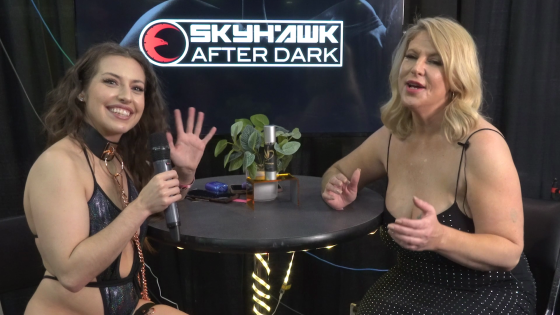
By Darcie Dean | SkyHawk After Dark
Let’s be honest. Making friends as an adult can feel like trying to date, but with less flirting
and more scheduling. People are busy. People are tired. People have families, careers,
responsibilities, and a hundred tiny commitments that drain the social battery before the weekend
even arrives. Even when you want community, it can be hard to find spaces where adults are open,
welcoming, and genuinely interested in connection.
That’s the part of the sex positive Lifestyle nobody talks about enough.
Yes, there are parties. Yes, there’s play. But what surprised me most, especially being active in
the Denver community, was how often the Lifestyle becomes a doorway to real friendships. Not party
friends. Real friends.
The Lifestyle creates something rare: intentional social spaces for adults
Most adult socializing is passive. You see coworkers because you have to. You run into neighbors by
accident. You keep up with old friends if time allows.
Lifestyle spaces tend to be more intentional. People show up on purpose. To meet like minded
adults. To be around nonjudgmental energy. To have honest conversations. To feel seen without
performing.
The community is accepting because it has to be
In healthy Lifestyle circles, judgment is expensive. If you shame people for what they’re curious
about, you kill the entire vibe. If you pressure people past their comfort zone, you lose trust. If
you gossip, you create fear.
So the best communities build norms that protect everyone.
Friendship happens faster when people are allowed to be real
There’s a specific kind of conversation that happens in Lifestyle spaces that you rarely get at a
normal bar or dinner party. It’s not explicit. It’s honest.
People talk about marriage and desire, stress and mental load, confidence and body image, aging and
sexuality, and communication skills most people never learn. It’s not therapy, but it can be
unexpectedly healing to be around adults
who don’t flinch at honest topics.
Denver: a community vibe, not just an event calendar
Denver has a unique energy. It’s a city full of transplants, reinvention stories, and people
building a life that fits them instead of following a script. That shows up in the Lifestyle scene
here.
The people I’ve connected with aren’t just looking for a wild night. They’re looking for community
that aligns with how they actually live. Open minded. Socially aware. Emotionally intelligent.
Protective of consent and privacy.
Welcoming to different dynamics.
I’ve built relationships and friendships that extend far beyond parties. We’ve supported each other
through real life, including stress, relationships, big changes, and everything that happens
outside the bedroom. That’s what makes it feel like a Lifestyle and not just an activity.
What outsiders get wrong about swingers
A lot of people assume swingers are reckless, emotionally detached, or trying to fix something.
None of that has matched what I see in healthy communities.
Most of the people I’ve met are thoughtful and communicative, clear about their boundaries, big on
mutual respect, serious about safety and discretion, and often more emotionally aware than average.
That doesn’t mean it’s perfect, nothing is, but it does mean the stereotype is outdated and misses
the point.
The Lifestyle isn’t about saying yes to everything
Sex positive doesn’t mean always available. It means you get to choose without shame.
One of the most empowering things about the Lifestyle is watching people learn to say what they
actually mean.
That confidence spills into everything else, especially friendships. People who can communicate
clearly make the best friends. They’re consistent. They’re respectful. They don’t play weird social
games. They don’t punish honesty.
How lifelong friendships actually form here
The friendships that last usually come from a few simple patterns.
Consistency over intensity. The people who become real friends aren’t always the loudest. They’re
the ones who show up, check in, and stay respectful.
Shared values. Consent culture isn’t just a rule. It’s a value system. When you share values,
friendship is easier.
Mutual care. In the best circles, people look out for each other. That can be as simple as making
sure someone gets home safely or as big as being there when life hits hard.
Discretion without shame. There’s a difference between privacy and shame. The Lifestyle taught me
that you can
keep things discreet while still being proud of your choices.
The real takeaway: you might find your people here
I’m not here to sell anyone on the Lifestyle. It isn’t for everyone, and it doesn’t need to be. But
I will say this. If you’ve felt lonely as an adult, if you’ve craved a community that’s
nonjudgmental and emotionally mature, and if you want friendships that aren’t built on pretending,
this world can surprise you.
I came into the Lifestyle thinking it would be mostly about fun. It is fun. But the deeper story is
that I found connection. I found acceptance. I found lifelong friends.
And in a world where adult friendships are harder than they should be, that’s not a small thing.

Skyhawk After Dark TV is a video-sharing website that specializes in adult video content in the categories of movies, video games, sports, music and TV. The company is a division of The Skyhawk Radio Network with offices in Los Angeles, and London..